Desquamation of the facial skin: what is it and causes

Desquamazione della pelle del viso

Both external and internal factors can alter the defense mechanisms and cause severe skin dehydration and flaking of the facial skin.

That is why skin care is critical during treatment. Side effects can be debilitating and can impair the patient’s quality of life.


What is facial skin desquamation

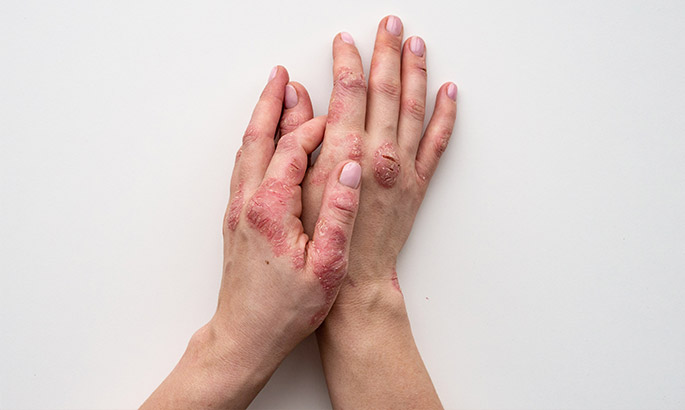
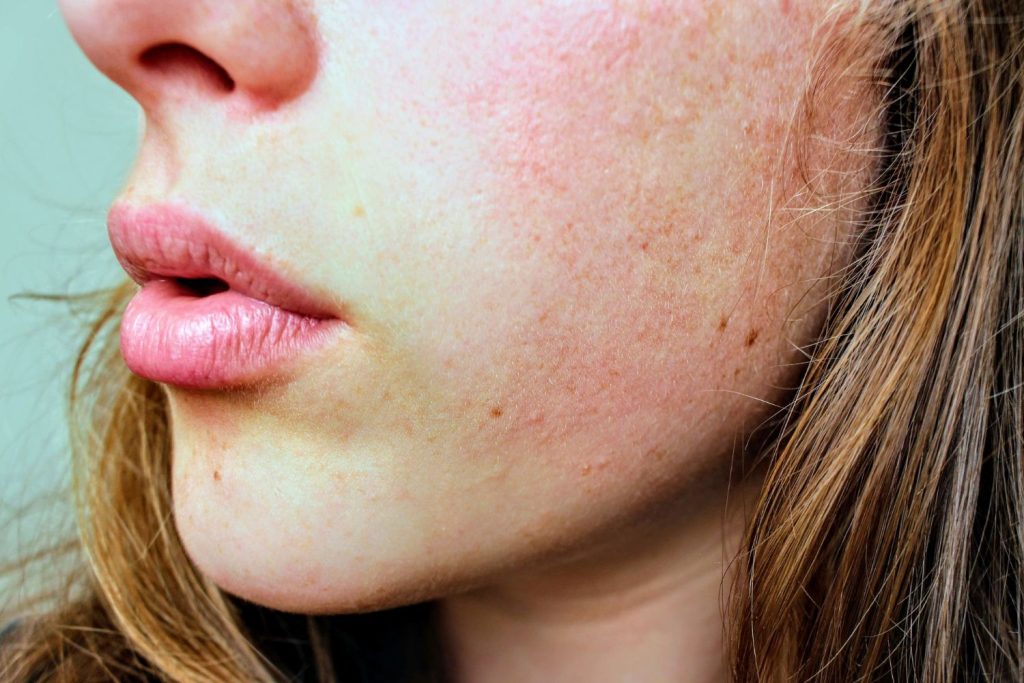
Skin desquamation refers to the loss of the most superficial layer of the epidermis, known as the stratum corneum. Scaling causes an accumulation on the skin of scales, which is typical of dry, dehydrated skin and sometimes also results in redness, burning, and itching.

Skin desquamation can have different characteristics and coloration:

  • fine and read;
  • In the shape of fish scales;
  • oily and greasy;
  • grayish-white;
  • yellow.

In addition, skin flaking, besides causing discomfort and itching, can lead to other disorders, such as contact dermatitis (inflammation of the skin caused by direct contact with irritants) and infection.

Skin desquamation, affects various areas of the body, but the areas where it is most noticeable and also most common is undoubtedly the face.

The face, is one of the parts of our body that has a thinner epidermis and stratum corneum (as well as being more exposed to the elements). For these very reasons it is more common to occur in this area of the body. Initially it manifests as tightness and roughness, but if left untreated the situation can worsen and the skin can become very tight and flaky, causing much itching and discomfort.


The causes of facial skin flaking

The causes of facial skin peeling can be many: in case of sunburn, burn, or it can occur as a result of some dermatological diseases, such as eczema, but also due to cancer therapies. To alleviate the problem you can use our moisturizing facial cleanser, a gentle emulsion formulated to cleanse and moisturize the skin of the face and neck.


Why does the skin flake?

There is desquamation of the skin; when lipids are present in minimal amounts, the skin stops acting as a barrier and therefore “water loss” is more likely to occur. This results in dry and flaky skin, looking less radiant and sometimes even rough.
Dermatitis and chemotherapy: 4 practical tips

Dermatite da chemioterapia - Oncos

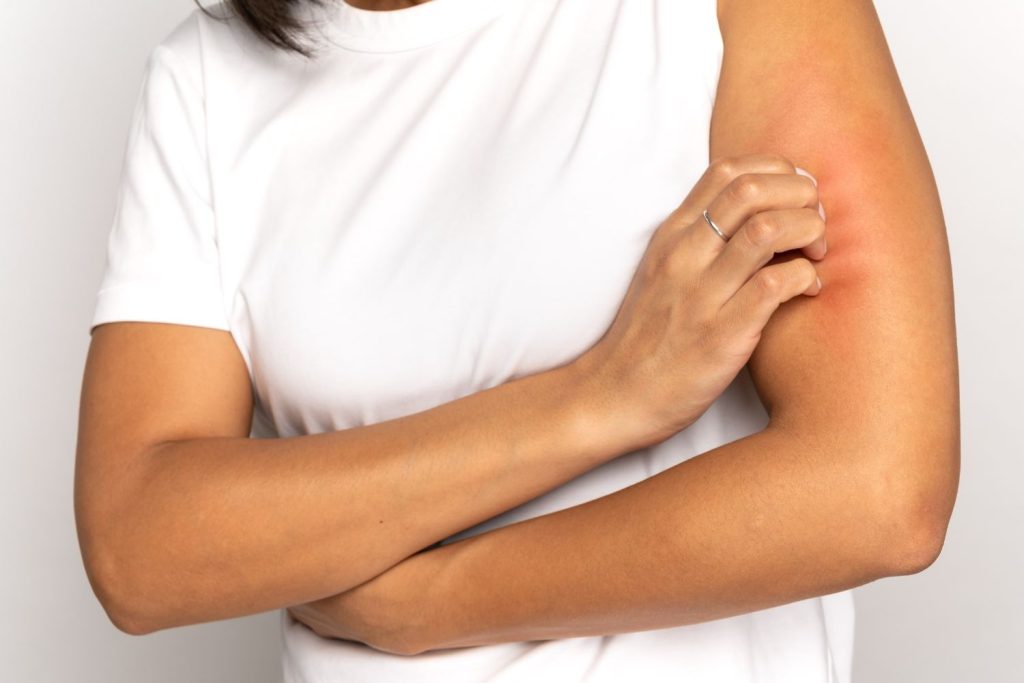
Dermatitis and chemotherapy, an issue that affects the skin during chemo. It often presents as irritation, itching, scaling and dryness.

This condition is very common and it is normal for your skin stressed by cancer therapies to present irritation, itch or appear dry and cracked.

This reaction may be more or less intense and may appear at different stages of ongoing cancer therapy.

Chemotherapy dermatitis starts as a simple dry skin sensation that, often, is underestimated because it cannot be directly linked to cancer therapies.


Here are 3 practical tips for taking care of chemotherapy dermatitis:

  • Before starting cancer therapy, prepare the skin for treatment by softening and moisturizing it daily. We recommend using the Emollient Body Cream, Moisturizing Face Cream and Protective Dry Oil;
  • Should you be exposed to the sun, always wear a hat and comfortable, opaque clothes to protect you from the sun’s rays. Avoid direct exposure to sunlight if possible;
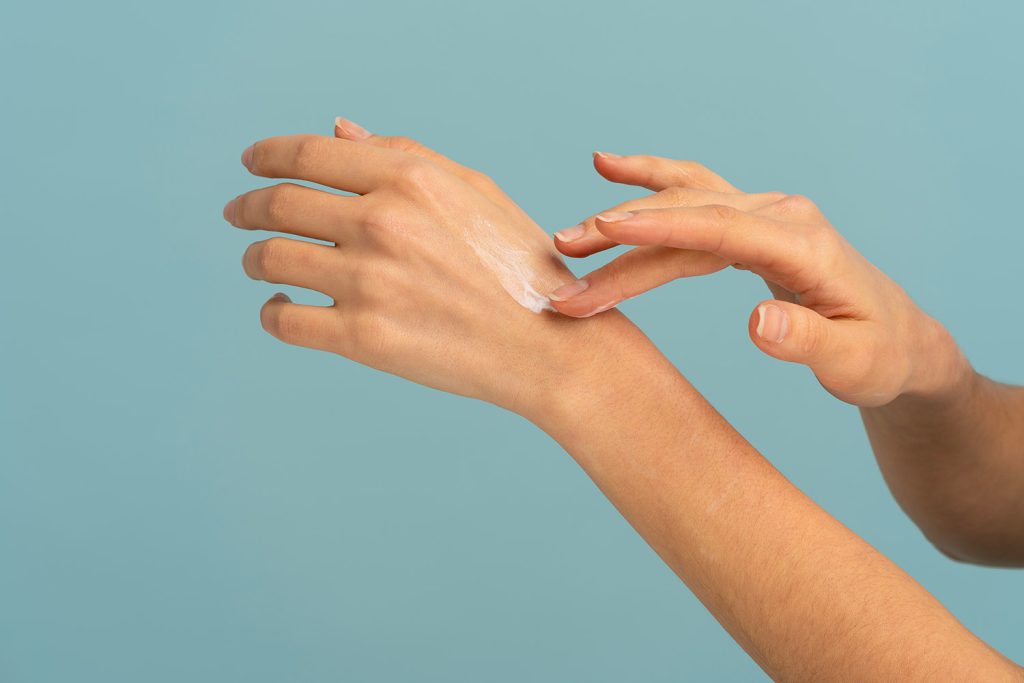
  • When you feel the itching sensation, massage your skin with Emollient Body Cream to moisturize it immediately. Our emollient body cream is specially designed to deeply moisturize the skin even and especially for cancer patients;
  • Always shave face and body with an electric razor. Avoid razor blades, this way you can reduce the risk of abrations or cuts.
    Chemotherapy dermatitis is therefore controllable with proper care and Oncos products!

Chemotherapy and dry skin: remedies and tips

Chemioterapia e pelle secca - Oncos

Chemotherapy and dry skin, some practical tips. Chemotherapy, as we all know, is a drug therapy to stop the growth of cancer cells. The drugs that are used serve to combat these or prevent them from dividing.

According to their nature, they are distinguished into:

Antimicrobial, or anti-infective, chemotherapy targets pathogenic microorganisms and cells infected by them; its products are called antibiotics, antivirals, antifungals etc;

antineoplastic chemotherapy, which targets neoplastic cells with drugs known as anticancer drugs.

Thus, the basic requirement of the chemotherapeutic drug is target selectivity: it eliminates neoplastic cells while preserving healthy cells. Unfortunately, however, there are still no drugs that can act only on the tumor mass without presenting side effects on other tissues in the body.

It must be said, however, that usually these tissues are able to return to their initial state at the end of therapy.


Side effect: chemotherapy and dry skin (Xerotic)

The side effects of chemotherapy are often the biggest cause for concern when starting this path, as they can be multiple and you never know what to expect.

These include dryness of the skin also called Xerotica. Among the side effects, in order of frequency it is among the most common. It occurs over the entire skin area although it is most noticeable on the hands and feet.


How to intervene in dry skin: remedies and tips

Chemotherapy and dry skin, what to do? When dry or Xerotic skin occurs, first consult your doctor and ask what is best to use and what is not.

However, there are good practices to incorporate into one’s daily routine that are still good to follow.

For washing:

  • Avoid washing with solid or liquid soaps or synthetic detergents; they may increase the dryness of the skin;
  • to wash hair or hands use so-called “washing bases”: these are cleansing products that do not foam and wash without drying out the skin.

Choose a gentle shower shampoo while respecting the skin’s natural pH and the balance of the skin’s hydrolipid mantle. Enriched with keratin and panthenol it has a moisturizing and restructuring action.

After washing:

  • in areas of particular dryness, it is appropriate to apply a self-hydrating ointment that can draw water from deep within the skin to the surface;
  • Avoid using moisturizers that are not effective for this type of dryness (always ask your doctor);
  • Apply an emollient cream where the dryness is less, in which case it is preferred to an ointment.

Choose an emollient body cream formulated to moisturize, protect, soothe and improve the overall condition of the skin.

Chemotherapy and sunshine: 4 practical tips

Chemioterapia e sole - Oncos

Chemotherapy and sunshine: is it a possible combination? Yes, with proper arrangements!

With the arrival of summer and hot weather, side effects from cancer therapy can become more acute. These are accompanied by states of nausea, anemia, and weakness.

In addition, some drugs used for chemotherapy, have photosensitizing effects. Exposure to the sun could cause major sunburns, skin spots, and skin damage.


But how to juxtapose chemotherapy and sunshine? Here are 4 practical tips:

Try to go to the beach, lake or mountains at least 10 to 12 days after your last session to give your body time to get rid of some of the side effects.

Do not expose yourself to the sun from 11 am to 5 pm. Cover your head and eyes with hats and goggles and use extremely high sunscreen and apply it every half hour.
Standing still on the lizard effect deckchair? No! Try to stay in motion as much as possible so that your circulation is always going!

Hydrate, hydrate, hydrate, both inside and out! Drink plenty of water and apply extremely moisturizing creams such as Emollient Body Cream or Protective Dry Oil to your skin.

As you can see, the combo of chemotherapy and sunshine is not impossible if you take the right steps! Vacations, are not forbidden for those who are going through this journey, however, we recommend that you always choose destinations in Italy and make contact with the cancer center or a local oncologist with respect to your destination. Also, always remember to talk to your primary care physician first and have all your documentation with you during your trip!

“Generic” dermatitis and oncological dermatitis: what are the differences

Dermatite “generica” e dermatite oncologica - Oncos


The generic term dermatitis refers to several conditions that cause erythematous-itchy eruptions. Eczema is a synonym but is often used to refer to atopic dermatitis. Skin infections, such as fungal infections, are not classified as dermatitis.
Some types affect only specific areas of the body such as:

  • contact dermatitis nummular dermatitis, stasis dermatitis or dyshidrosis.

Others, however, can occur anywhere such as atopic dermatitis or exfoliative dermatitis.

Some types of dermatitis have a known cause (such as allergic contact dermatitis), while for others the cause is unknown (such as nummular dermatitis).

Instead, the expression cancer dermatitis ( or chemotherapy dermatitis or chemo dermatitis) refers more specifically to one of the unpleasant skin side effects that affect cancer patients undergoing chemotherapy.

New chemotherapeutic agents and new protocols in oncology have led to increased survival rates in cancer patients. However, this increase in use has been accompanied by an increase in the incidence of skin side effects and a worsening of patients’ quality of life. Therefore, appropriate management of skin toxicity associated with chemotherapeutic agents is necessary for appropriate drug delivery and to improve quality of life and clinical outcomes.


Dermatitis: remedies for general one and natural remedies for dermatitis from drugs and chemotherapy treatments.

Cancer therapies have become more selective and have low systemic toxicity. This is because of their high specificity. Skin side effects are still common and can worsen patients’ quality of life. Even, they can, over time, cause a desire to discontinue antineoplastic therapy.

There are, however, whether chemotherapy dermatitis or the common types of generic one, some remedies that can provide relief to the skin during cancer therapies. Particularly to keep the skin soft and reduce the discomfort caused by cancer, it is advisable:

  • Use products without alcohol or fragrance, which are less aggressive to the skin
  • Wash the skin to remove makeup, impurities and dead skin with products formulated with neutral pH
  • Prefer quick, lukewarm showers to hot baths that may rekindle itching.
  • Gently dry the skin by blotting with a towel without rubbing
  • Moisturize the skin regularly, even 2 or 3 times a day, with soothing and anti-inflammatory moisturizers
  • Moisturize the lips by applying cocoa butter
  • Wear clothes that do not tighten, avoiding synthetic fibers and wool that may cause irritation, preferring cotton.
  • Drink plenty of water to keep the body hydrated

Chemotherapy acne: what it is and why it occurs

Acne da chemioterapia

Side effects of drugs used during cancer treatment can cause acne or rashes on the face or body. The cause ofchemotherapy acne is often to be found in a combination of factors:

  • chemotherapeutic drugs
  • The drugs used to treat the side effects of chemotherapy
  • Steroids used to enhance the effects of chemotherapy.


Chemotherapy acne and classic acne: the differences

“Classic” acne can appear anywhere on the body. Chemotherapy acne occurs mainly on the face and scalp of people affected by cancer. It usually occurs within a few days of chemotherapy or within a few days of taking certain drugs.

Chemotherapy acne can range from mild to severe, but regardless of its severity, it can be a source of low self-esteem during treatment. The good news is that there are remedies for acne. In fact, it is always possible to manage it with both over-the-counter medications and medications prescribed by the treating physician.


Remedies for acneda chemotherapy: how to improve appearance and self-esteem.

Acne remedies depend on a few different factors:

  • the type of acne
  • his position
  • its severity.

The physician may prescribe medications to be taken orally or topically. Such as an oral antibiotic (tetracycline) or as a topical antibiotic gel (clindamycin).

The first step in treatingchemotherapy acne is to discuss it with your doctor, who, in some cases, may refer you to a dermatologist who specializes in diagnosing and treating skin-related conditions.

It should be noted that about 70 to 80 percent of patients after two weeks of chemotherapy make the acquaintance, despite themselves, with folliculitis, which is inflammation of hair follicles. Although there is a similarity, folliculitis should not be confused with acne and, therefore, for treatment of facial folliculitis or legs ruined by folliculitis, it is necessary to talk to your doctor who will be able to recommend the most appropriate treatment.

There are creams specially formulated for the treatment of chemotherapy folliculitis that have anti-inflammatory, capillarotropic, vasoprotective, astringent and soothing actions. If folliculitis occurs on the face, it is advisable to apply a face folliculitis cream to reduce inflammation and provide relief to the skin.

Drug-induced skin rash: what it is, how it occurs, and possible remedies

Rash cutaneo

Drug skin rash is a change in skin color and appearance associated with skin irritation or swelling caused by a reaction a person’s skin may have to certain drugs.

In general, the dermatological rash presents as a red, itchy, painful rash, but sometimes it can also consist of bubbles or rough plaques, and it is fairly easy to tell whether it is, in particular, drug rash or other skin eruptions: First, most drug rashes are symmetrical, that is, they occur equally on both sides of the body; second, the skin irritation tends to coincide with the start of taking the new drug, although there are drugs that can take up to two weeks to cause a rash.

Drug-related skin rash can potentially be caused by almost any drug, but generally the main culprits are antibiotics-particularly penicillins and sulfa drugs-NSAIDs-Nonsteroidal Anti-Inflammatory Drugs-and antiepileptic drugs.

Skin rash from chemotherapy and other cancer treatments: remedies from Oncos.

Among the side effects of cancer treatments is skin rash from chemotherapy or other treatments.Preventing this unpleasant side effect is not only possible, it is a must, since it leads to a drastic improvement in the quality of life of patients. There is a need, therefore, for greater awareness on the part of oncologists of the need to be supported, in the treatment of neoplasms, by dermatologists even before treatment begins with a “skin care” protocol that prepares the skin for the extreme stress that awaits it. The basic principle is to prevent rupture of the corneal barrier and the resulting cascading effects.

Chemotherapy drug skin rash is the most frequent adverse event (78/87%): it appears on average within two weeks after the start of therapy and disappears after the end of treatment. It was believed that its severity was an indicator of drug efficacy, but subsequent studies have not confirmed this.

During and after treatment, effects can be minimized with topical products specifically formulated for this disorder, such as rash ointment and skin rash cream. These are products that aid hydration while ensuring respect for the skin’s natural hydrolipid mantle (NMF). In fact, to soothe and decrease inflammation, we recommend proper cleansing with the use of thermal waters and antioxidants such as vitamin E.